How Chair Yoga Can Ease Lower Back Pain in Older Adults
Chair yoga for lower back pain makes sense for one simple reason: it gives you support where you need it. A lot of older adults are not dealing with just one issue. It might be back stiffness plus weak hips, sore knees, poor balance, or plain old fear of getting down on the floor and struggling to get back up. A chair removes a big chunk of that problem. You get the benefit of movement, breathing, and gentle stretching without wasting energy on staying steady.
It also helps because most lower back pain in older adults is tied to stiffness, too much sitting, tight hips, and a core that has gone a bit offline. That does not mean every ache can be fixed with stretching. Some back pain comes from arthritis, spinal stenosis, disc problems, or old injuries. But for many people, gentle back exercises done regularly can reduce muscle guarding, improve posture, and make everyday movements less cranky. The key word is gentle. The back usually responds better to calm, repeatable movement than aggressive stretching that leaves you sore the next day.
Set yourself up the right way before you start stretching
Before you do any seated stretches, get picky about your setup. Use a sturdy chair that does not roll or swivel. A dining chair is usually better than a deep couch or a plush recliner. Sit toward the front half of the seat so your spine can stay tall instead of collapsing into the backrest. Put both feet flat on the floor, about hip-width apart. If your feet do not reach comfortably, slide a book or firm cushion underneath them. That little adjustment matters more than people think.
Now check your posture, but do not force military-straight perfection. Think long spine, relaxed shoulders, chin level. If sitting tall is hard, place a small folded towel behind the lower back for light support. And this part is important: movement should stay in the range that feels easing or neutral, not sharp, zappy, or alarming. If pain shoots down your leg, if you feel numbness, or if your symptoms spike afterward instead of settling, that is a sign to stop and get medical guidance. Chair yoga should feel like opening a stuck window, not yanking it off the frame.
Four seated stretches that usually help the back loosen up
Start with a seated cat-cow. Place your hands on your thighs. As you inhale, lift your chest slightly and let the spine lengthen. As you exhale, round gently, drawing the belly in a bit and letting the head follow naturally. Keep it small. This is not a dramatic yoga class version. Think smooth, easy motion for 6 to 8 rounds. It helps wake up the spine without asking too much from it first thing.
Next, try a seated side bend. Let one hand hold the side of the chair while the other arm reaches up and over just a little. You are aiming for length through the side body, not a huge lean. Hold for two or three slow breaths, then switch sides. After that, do a gentle seated twist: sit tall, place one hand on the opposite thigh and the other on the chair behind you, then rotate from the ribs and upper back more than the low back. Keep it mild. Finish with a seated figure-four stretch if your hips allow it. Cross one ankle over the opposite knee or shin, flex the foot, and hinge forward only a little until you feel the outer hip wake up. Tight hips often dump extra strain into the lower back, so this one can be surprisingly effective for older adults back relief.
Gentle back exercises that build support, not just flexibility
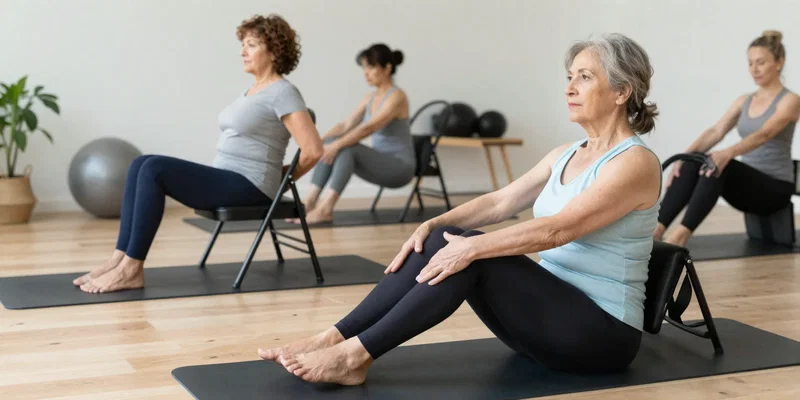
Stretching is useful, but if you stop there, you miss half the picture. A back that feels vulnerable usually needs support as much as it needs mobility. That support can come from simple seated strength work. One good place to start is gentle abdominal bracing. Sit tall, exhale, and lightly tighten the muscles around your midsection as if you are preparing for a cough. Do not suck in hard. Just create a small sense of support around the trunk, hold for a few breaths, then release. Repeat several times. It teaches your body how to stabilize without tensing everything.
Seated knee lifts are another solid option. Hold the sides of the chair, brace lightly through the belly, and lift one foot a few inches, then lower with control. Alternate sides for 8 to 10 reps each. Small is fine. You can also add heel presses: with both feet flat, press them gently into the floor while sitting tall, hold for five seconds, then relax. It sounds almost too basic, but it encourages the legs and core to share the load. That is often what the lower back has been begging for. If you spend long stretches sitting, these gentle back exercises can break the cycle of stiffness without leaving you wiped out.
What to expect after a week or two, and what people often get wrong
A lot of people try chair yoga once, feel a little better, then forget about it for five days and wonder why nothing really changes. Lower back pain usually responds to consistency more than intensity. Ten minutes most days beats one heroic forty-minute session that irritates everything. If a few seated stretches make your back feel looser right away, great. But the bigger payoff usually shows up in regular life: standing up with less stiffness, walking a little easier, needing fewer position changes during the day, and feeling less guarded when you bend or reach.
The most common mistake is pushing into pain because you assume more stretch equals more relief. Not usually. Another mistake is moving too fast. Slower reps with breathing tend to calm the nervous system and reduce the sense of threat around movement. Also, do not ignore the hips and upper back. People obsess over the sore spot, but the lower back often takes the hit for stiffness somewhere else. If your body likes a certain move, keep it in the rotation. If one exercise always aggravates things, drop it. There is nothing noble about sticking with a stretch your back clearly hates.
When chair yoga is a smart home tool, and when it is time to get extra help
For everyday stiffness, mild muscular soreness, or the kind of ache that comes from too much sitting, chair yoga can be a very smart home habit. It is accessible, low-pressure, and easy to repeat. That matters because the best pain-relief routine is usually the one you will actually keep doing. Many older adults do well with a short practice in the morning to loosen up and another few minutes in the afternoon if the back tightens after sitting.
But there are times when home exercise should not be your only plan. If you have severe pain, recent injury, unexplained weight loss, fever, new weakness, bowel or bladder changes, or pain that shoots down the leg with numbness or tingling, get evaluated. The same goes for pain that keeps getting worse no matter how carefully you move. Chair yoga is helpful, not magical. Used well, it can reduce stiffness, improve confidence, and give the lower back some breathing room. For plenty of people, that is exactly enough to make the day feel manageable again.